
Infectious disease
Illness caused by pathogens invading host tissues.

Rosser1954 · CC BY-SA 4.0
An infectious disease is an illness resulting from an infection, which is the invasion of tissues by pathogens, their multiplication, and the reaction of host tissues to the infectious agent and the toxins they produce. Some infectious diseases are communicable (transmissible).
- field
- Medicine
- known_for
- Illness resulting from infection by pathogens such as bacteria, viruses, fungi, and parasites
- global_deaths_2017
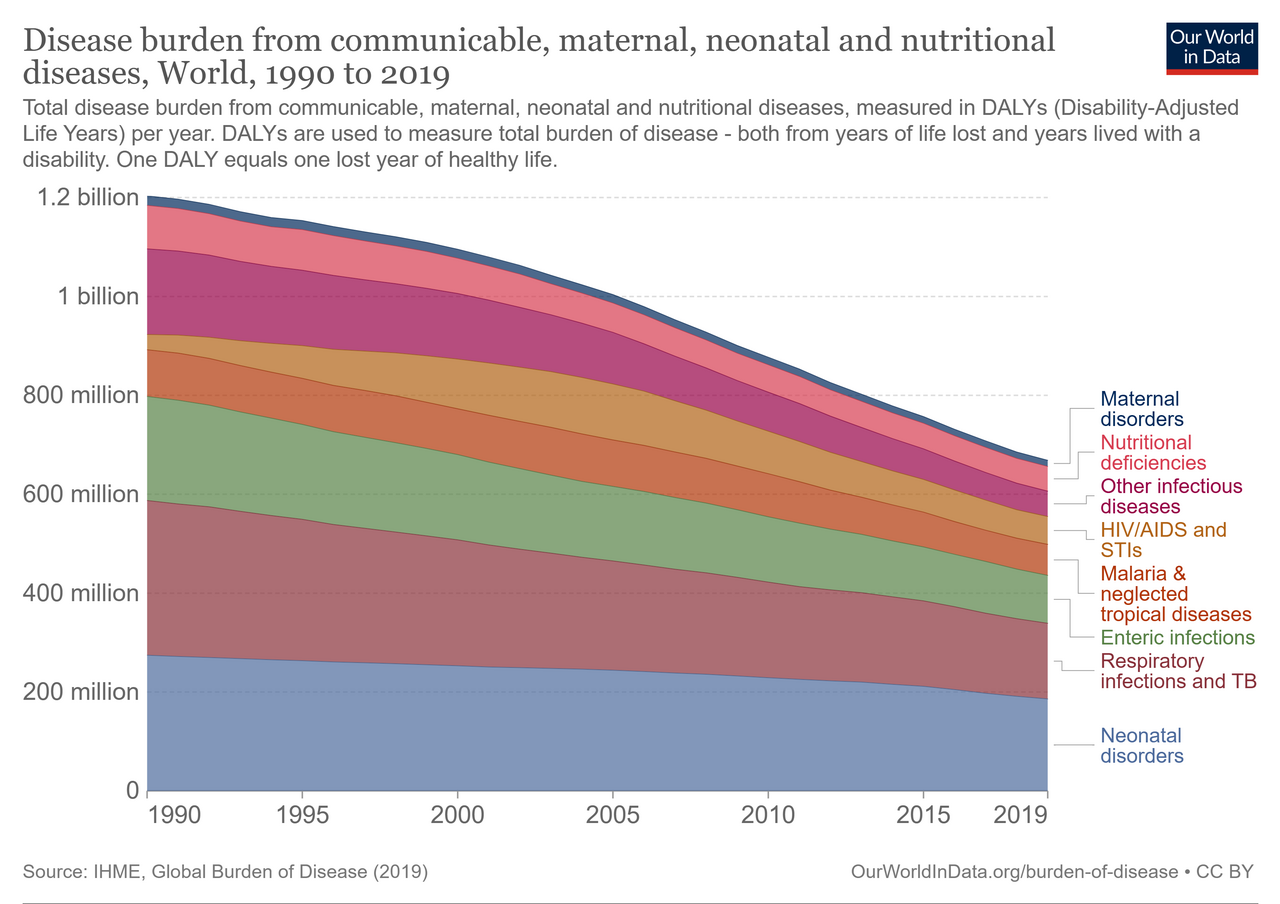
- 18.6% of global deaths from communicable, maternal, neonatal, and nutritional diseases
- common_treatments
- Antibiotics, antivirals, antifungals, antiprotozoals, antihelminthics
Lore & Background
Infectious diseases are caused by a wide range of pathogens, most prominently bacteria and viruses, but also fungi, parasites, and subviral agents such as viroids and prions. Hosts can fight infections using their immune systems, with mammalian hosts reacting via an innate response, often involving inflammation, followed by an adaptive response. Treatment depends on the type of pathogen: antibiotics for bacteria, antivirals for viruses, antifungals for fungi, antiprotozoals for protozoans, and antihelminthics for parasitic worms.
Reader's Guide
The significance of infectious diseases lies in their persistent global burden and the complexity of their transmission and treatment. The chain of infection involves an infectious agent, reservoir, entry into a susceptible host, exit, and transmission to new hosts. Understanding these steps helps health care workers target and prevent infections. Colonization begins when an organism enters the body, grows, and multiplies; not all colonizations lead to disease, as many organisms exist in mutualistic or commensal relationships with the host. Disease arises when the host's immune mechanisms are compromised and the organism inflicts damage, often through toxins or destructive enzymes. Persistent infections, such as those caused by herpes virus, can remain latent with occasional relapses, contributing to millions of deaths globally each year, especially from chronic parasitic infections in underdeveloped countries.
Did You Know?
- An infection is not synonymous with an infectious disease, as some infections do not cause illness in a host.
- Bacterial and viral infections can cause the same symptoms, but viral infections cannot be cured by antibiotics.
- The prion causing mad cow disease and Creutzfeldt–Jakob disease invariably kills all infected animals and people.
- Less than 5% of individuals infected with polio develop disease.
The Birth of a Specialty
Infectious disease as a formal medical discipline is surprisingly recent. Although infections have plagued humanity throughout history, the dedicated specialty of infectiology only crystallized in the late twentieth century, with the 1970s marking a pivotal moment when a wave of newly identified diseases and the development of new vaccines made a focused field both necessary and feasible. Today, an infectious disease specialist's work centers on identifying the precise cause of an illness—whether bacterial, viral, parasitic, fungal, or prion-based—and then selecting the most effective therapeutic agent. These specialists operate in dual settings: in hospitals, they drive rapid diagnosis and treatment of acute infections, recommending targeted diagnostic workups and prescribing appropriate antimicrobials; in outpatient clinics, they provide the long-term management that chronic conditions like HIV/AIDS demand. They frequently serve as consultants to other physicians when a case resists straightforward diagnosis, including puzzling fevers of unknown origin, and they oversee both healthcare-acquired and community-acquired infections across diverse patient populations.
Ancient Roots and the Printing Revolution
The intellectual groundwork for understanding infectious disease stretches back to Ancient Greece. Hippocrates, whose collection of roughly seventy texts known as the Hippocratic Corpus included a work called the Epidemiai volumes, catalogued illness-causing infections and helped shape the Western medical approach to contagious illness. Centuries later, Galen of Pergamon produced treatises during the Roman era that offered detailed observations of what we now recognize as smallpox, linked to the devastating Antonine Plague. For many centuries, knowledge of individual diseases like syphilis, malaria, and smallpox remained scattered across isolated medical writings. The invention of the printing press by Gutenberg and the subsequent mass production of medical books between the sixteenth and eighteenth centuries transformed this fragmented knowledge into a shared professional resource. By the late eighteenth century, the first smallpox vaccination had been established, yet a unified conceptual framework treating infectious disease as a single medical domain still eluded practitioners.
The Nineteenth-Century Breakthroughs
The nineteenth century fundamentally reshaped how medicine understood the origins of infectious illness. German physician Robert Koch identified the specific pathogens responsible for anthrax, tuberculosis, and cholera, anchoring the germ theory in concrete laboratory evidence. French scientist Louis Pasteur built on this foundation by pioneering vaccine development—most notably an anthrax vaccine—and by articulating the germ theory of disease in a way that influenced Joseph Lister to adopt antiseptic surgical techniques designed to suppress pathogen growth in the operating theater. These breakthroughs collectively shifted infectious disease from a vague, experience-based concept toward a structured, evidence-driven field of inquiry. Despite these advances, the discipline still had not coalesced into a recognized medical specialty. That formal recognition would not arrive until the 1970s, when the emergence of additional novel diseases and the expansion of vaccine technology created both the clinical need and the scientific infrastructure for a dedicated infectious disease practice.
The Diagnostic Toolkit
Once a clinician confirms that a patient's symptoms stem from an infection rather than a non-infectious condition, the infectious disease specialist deploys a layered arsenal of laboratory techniques to identify the culprit pathogen. Staining, particularly the gram-stain method, uses a violet dye to differentiate bacteria into gram-positive (appearing blue) and gram-negative (appearing red) categories under a microscope, though it is limited to organisms large and numerous enough to be visualized, rendering it useless against viruses. When pathogen quantities are too low for direct observation, culture tests allow the specialist to grow the organism in a laboratory setting until sufficient material exists for further analysis, though this approach fails for certain organisms like the syphilis spirochete. Serological assays, susceptibility testing, genotyping, nucleic acid-based assays, and polymerase chain reaction each add another dimension of identification. Crucially, the specialist must also separate harmless commensal bacteria from true disease-causing agents within the same sample, ensuring that treatment targets the correct organism.
Gallery


Frequently Asked Questions
Who is Infectious disease?
Infectious disease is a medical specialty centered on diagnosing and managing illnesses that arise when pathogenic organisms—bacteria, viruses, fungi, or parasites—invade host tissues, multiply, and provoke an inflammatory response. It operates within the broader Medicine field and covers both transmissible and non-transmissible infections.
What are Infectious disease's powers/role?
Its core function is to identify the specific pathogen, track how it replicates within the host, and counter both the organism itself and the tissue damage it triggers. The specialty wields a targeted therapeutic arsenal including antibiotics, antivirals, antifungals, antiprotozoals, and antihelminthics matched to the pathogen class.
How does Infectious disease's story end?
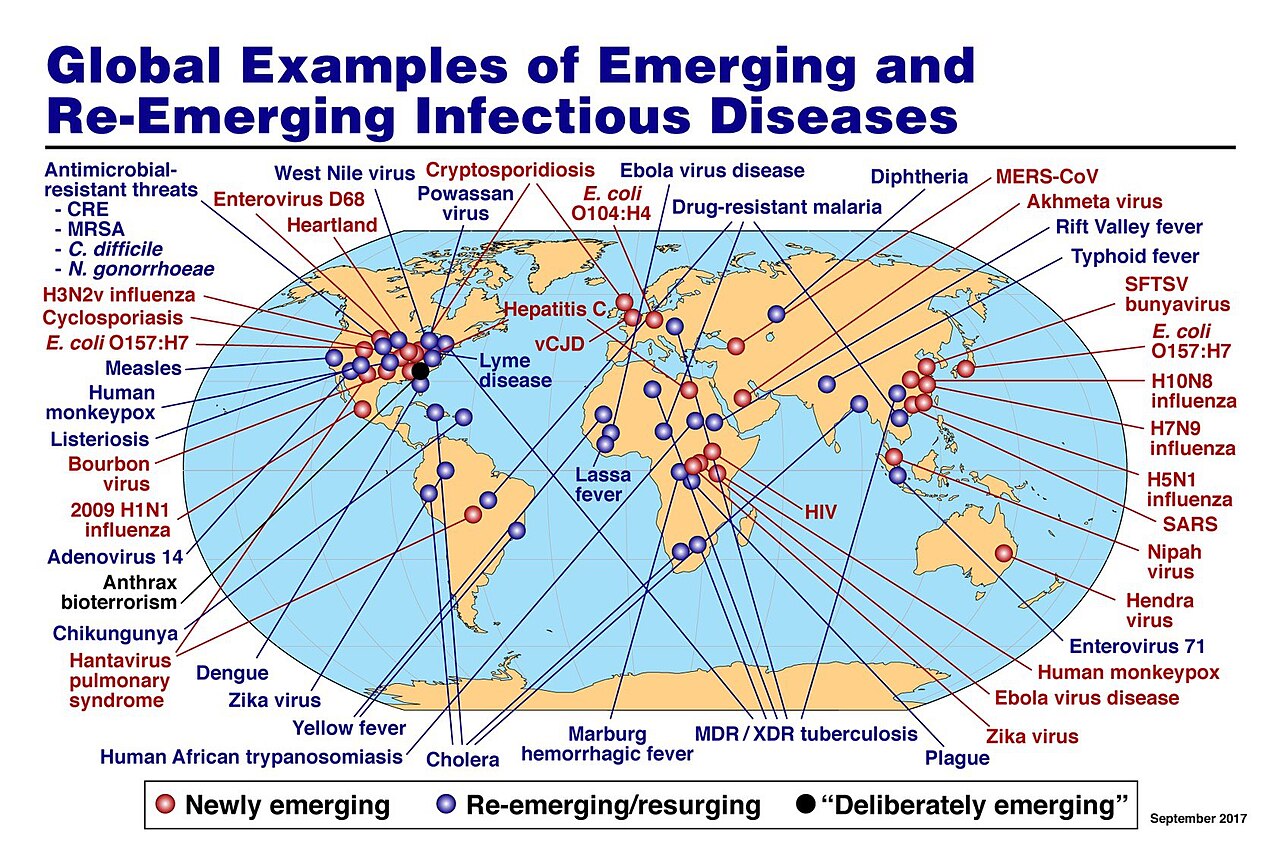
It never reaches a final chapter, because new and re-emerging pathogens keep introducing fresh plot twists into global medicine. The specialty remains a perpetual, ongoing arc rather than a concluded storyline.
What are Infectious disease's common tools?
The go-to toolkit spans antibiotics for bacterial threats, antivirals for viral ones, antifungals for fungal invaders, antiprotozoals for protozoan parasites, and antihelminthics for helminth infections. Each class is matched to a specific pathogen type, reflecting the specialty's emphasis on precision over a one-size-fits-all approach.
More in Medical Specialties 1-15
Spotted an error? Know more?
This is a living reference — every entry is fact-audited, and reader corrections feed straight into our audit queue. Suggest an edit · See this site's audit record